
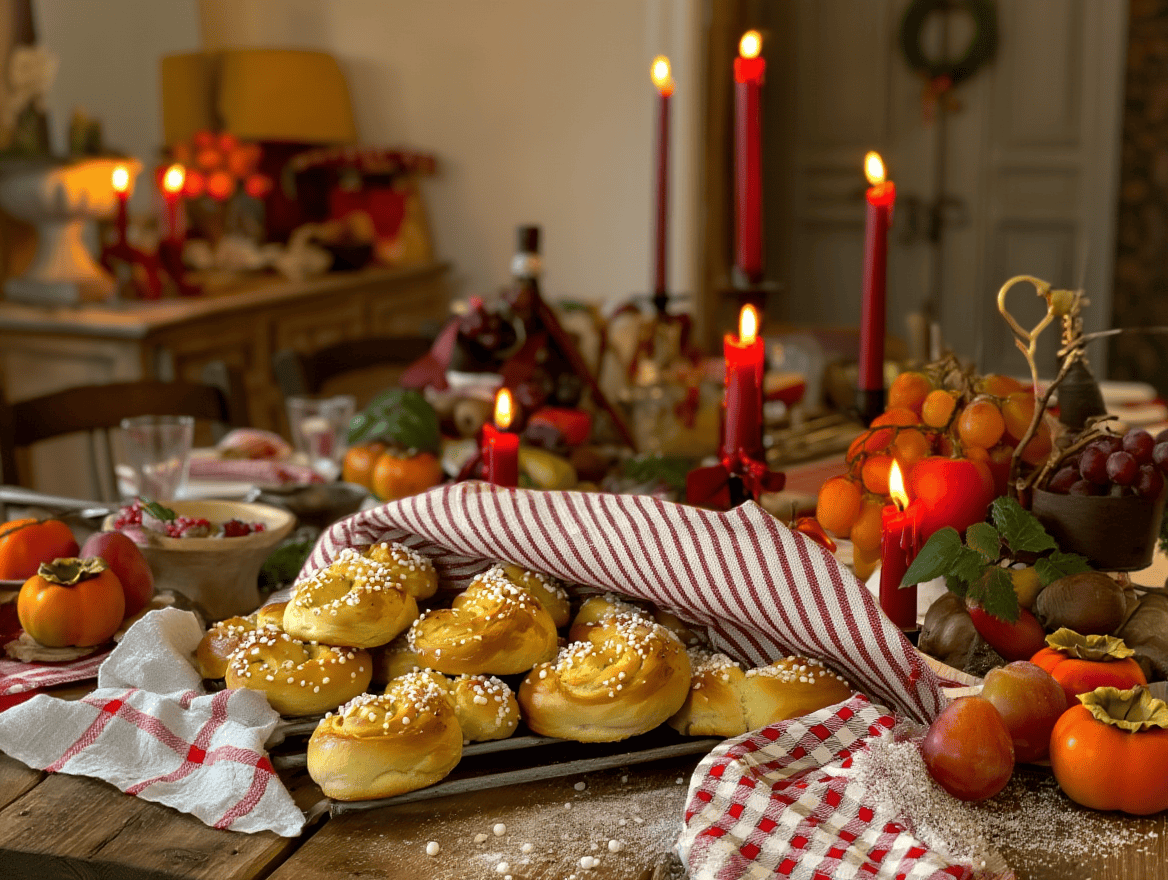
Below you’ll find my best recipes and some perfect gluten free baking ideas to the Christmas table. Enjoy!
Lussebullar
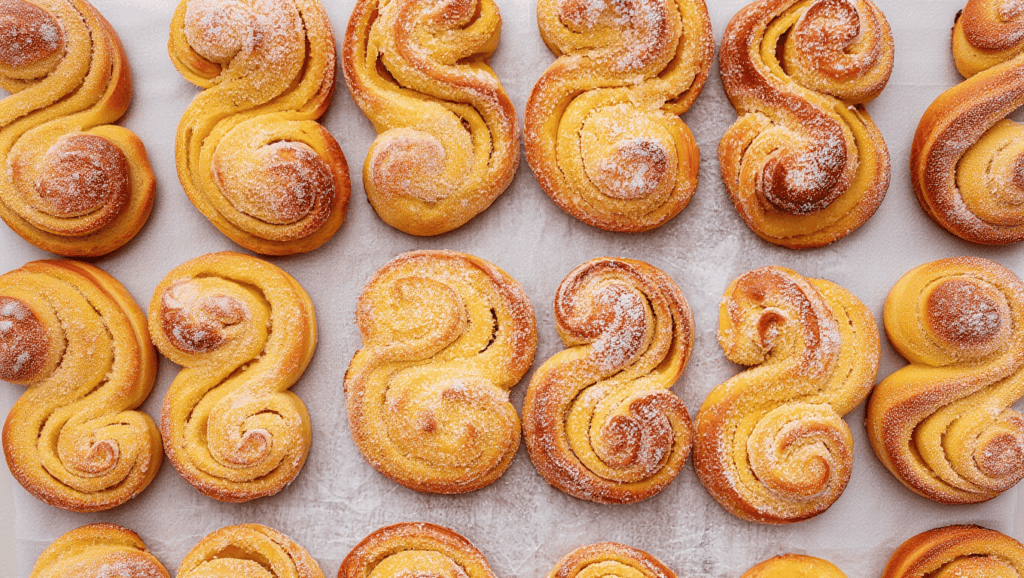
Lussebullar, or saffron buns, are one of Sweden’s most beloved Christmas traditions. They are closely connected to the celebration of Lucia on December 13th, which is a warm and bright moment in the middle of the darkest time of the year.
For many people in Sweden, the smell of saffron immediately brings back memories of childhood, school celebrations, and cosy December mornings. Baking lussebullar is something many families do together as soon as Advent begins, and it marks the start of the Christmas season in a very real way. They are soft, mildly sweet, and wonderfully fragrant, and they always feel like a treat.
Lussebullar are popular not just because they taste good, but because they carry a sense of tradition and togetherness. In many Swedish homes, Christmas simply does not feel complete without at least one batch of freshly baked saffron buns.
Ingredients (around 25 buns)
- 3 dl milk
- ¾ dl quark (kesella) 10%
- 1 teaspoon fiberhusk or ground psyllium
- 100 g soft butter or margarine
- 1 dl light syrup
- Half a packet of yeast for sweet dough
- 1 sachet saffron, 0.5 g
- A pinch of salt
- 10 dl gluten-free flour mix
Brushing and topping
- 1 egg
- 2 tablespoons water
- A pinch of salt
- Raisins
Instructions
- Warm the milk and quark to about 37°C and pour the mixture into a bowl. Add the fiberhusk and stir. Let the mixture swell for about five minutes.
- Mix the butter and syrup until soft and smooth.
- Crumble the yeast into the milk mixture and stir until it dissolves. Add a spoonful of the butter mixture.
- Crush the saffron together with the salt in a mortar and add it to the dough mixture.
- Add seven deciliters of the flour mix and quickly work everything into a smooth batter. Cover the bowl with a cloth and let the dough rise for about thirty minutes.
- Add the remaining butter mixture and the rest of the flour mix. Work the dough until it becomes glossy and quite loose, but still manageable.
- Dust the work surface with flour mix. Turn out the dough and shape it into a long log. Cut it into smaller pieces. Roll each piece into a round bun and then into a long rope. If you want a richer flavour, you can add a small strip of almond paste to the dough piece before rolling it into a rope. Shape the ropes into traditional lussekatt forms.
- Place the buns on a baking tray lined with parchment paper. Press a raisin into each swirl. Let the buns rise for twenty-five to thirty minutes. Preheat the oven to 225°C.
- Mix a couple of tablespoons of water and a pinch of salt into the egg for brushing. The salt helps the egg dissolve and gives the baked buns a smoother, shinier surface.
- Brush the risen buns with the egg mixture. Bake in the middle of the oven for seven to eight minutes.
Gluten free buns dry out easily during proofing, which can cause cracks. Don’t cover them with a kitchen towel. Instead, spray the buns with water from a mist bottle once or twice during rising. As long as they stay slightly moist, the proofing won’t be interrupted.
Knäck
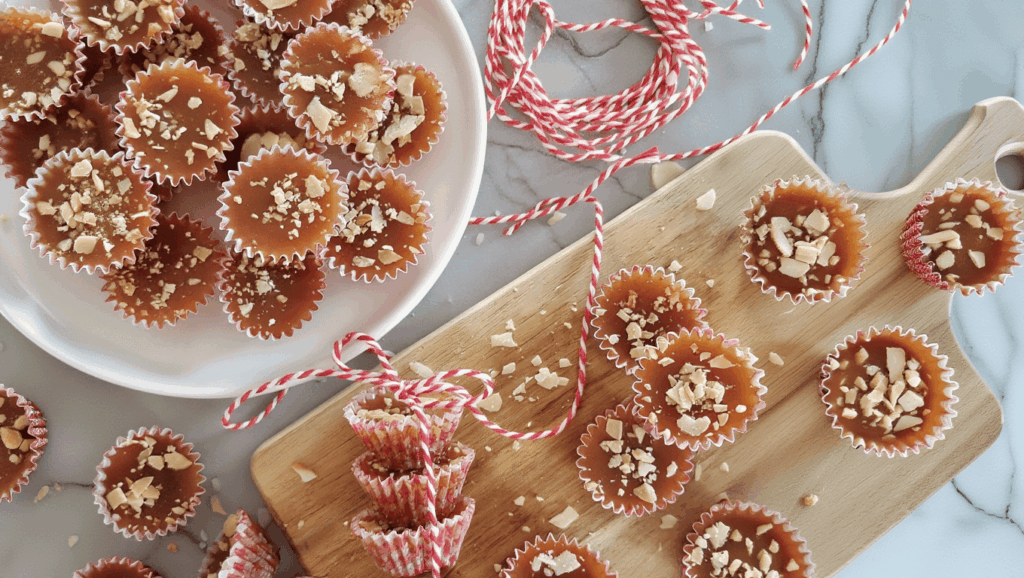
Knäck is one of Sweden’s most iconic Christmas candies, and almost every family has their own version of the recipe. It is a rich, chewy toffee made from cream, sugar, and syrup, and it has a wonderfully deep flavour that comes from boiling the mixture slowly until it thickens. The texture can vary from soft and chewy to hard and brittle, depending on how long you cook it, which is part of the charm.
For many Swedes, knäck is tied to childhood memories of Christmas baking, standing by the stove for what feels like forever, waiting for the syrupy mixture to reach just the right temperature. The smell of bubbling caramel fills the whole house, and spooning the hot mixture into tiny paper cups is almost a ritual.
Knäck is especially popular because it captures everything cosy about Swedish Christmas traditions. It is sweet, homemade, and a little bit nostalgic, and it always appears on the Christmas table alongside saffron buns, gingerbread cookies, and other treats. Making knäck is a small, simple tradition, but one that signals that Christmas has truly begun.
Ingredients (around 50 pieces)
- 2 dl granulated sugar
- 2 dl heavy cream
- 2 dl light syrup
- 50–70 small paper toffee cups
Instructions
- Place the small toffee cups on a tray.
- Mix the sugar, cream, and syrup in a wide, heavy-bottomed saucepan. Let the mixture boil strongly until it reaches about 125°C, depending on how firm you want the knäck to be. Use a digital kitchen thermometer or perform a cold-water test to check when it is ready.
- Remove the saucepan from the heat. Pour the mixture into a small jug with a narrow spout and fill the toffee cups right away. Let the knäck cool and set at room temperature. If you do not have a jug with a spout, you can fill the cups with the help of a teaspoon.
You could add almonds, licorice or chocolate to the mixture for more flavor.
Pepparkakor
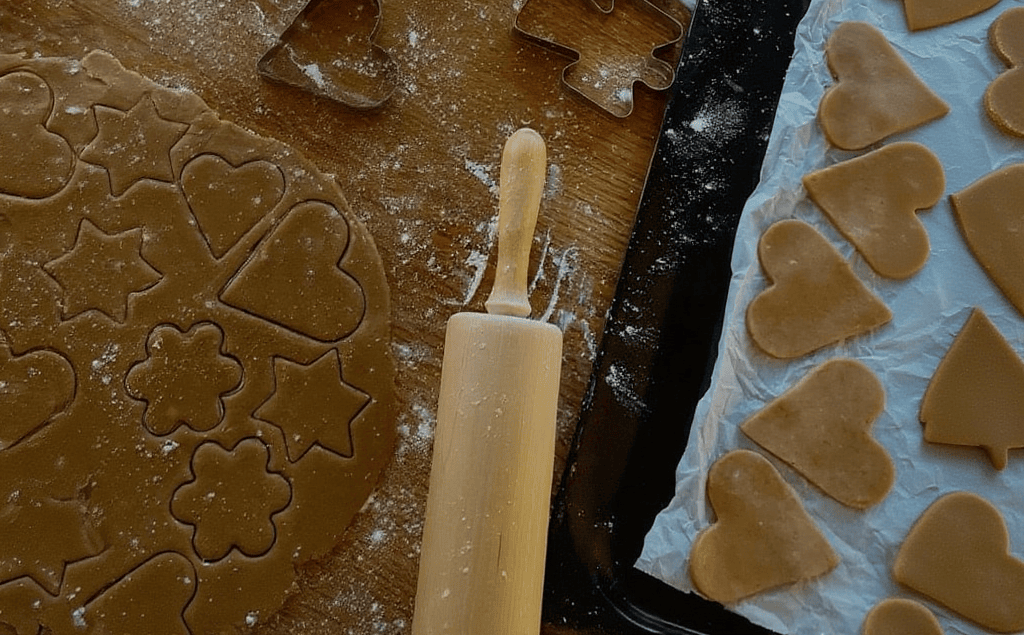
Gingerbread cookies, or pepparkakor, are one of the most iconic parts of a Scandinavian Christmas. Their warm flavors of cinnamon, ginger, cloves, and cardamom fill homes with a scent that, for many Swedes, marks the true start of the holiday season. They are crisp, thin, and slightly spicy, making them irresistible with a cup of glögg or coffee.
In Sweden, gingerbread has been baked for centuries and was once considered medicinal, believed to “make people kind” or improve digestion. Today, they are beloved for different reasons: they bring families together. Children roll out dough, cut little shapes, and decorate gingerbread houses, while adults often sneak a cookie or two straight from the cooling rack.
Gingerbread cookies fit perfectly into Swedish winter traditions because they carry warmth, comfort, and nostalgia. Whether enjoyed freshly baked, stored in a tin for weeks, or turned into a gingerbread house, they are an essential part of the cosy atmosphere that makes Christmas in Sweden feel so special.
Ingredients (around 70 cookies)
- 125 g butter
- 90 g (1 dl) granulated sugar
- 20 g (1/4 dl) brown sugar
- 70 g (1/2 dl) light syrup
- 2 teaspoons ground cinnamon
- 1 teaspoon ground ginger
- 1 teaspoon ground cloves
- 1/2 teaspoon ground cardamom
- 1 teaspoon powdered psyllium, such as Premium Psyllium or Fiberhusk
- 100 g (1 dl) cold water
- 1 egg
- 3/4 teaspoon baking soda
- 420 g (about 7 dl) gluten-free flour mix, such as Semper Mix
- Potato starch for rolling out the dough
Instructions
- Melt the butter in a large saucepan.
- Stir in the granulated sugar, brown sugar, syrup, and spices. Bring the mixture to a boil, then remove the saucepan from the heat.
- Add the psyllium and water. Let it sit and cool for about 20 minutes.
- Stir in the egg and the flour mix combined with the baking soda.
- Knead the dough using dough hooks for a few minutes. The dough will be quite soft.
- Wrap the dough in plastic wrap or place it in a plastic bag. Make sure not to wrap it too tightly, as the dough needs some space to swell. Place it in the refrigerator and let it rest for at least one day.
- After the rest, work the dough until smooth on a lightly potato-starch-dusted surface. (If you use a silicone mat, you usually do not need any extra starch.)
- Roll out the dough thinly in batches. Cut out cookies with gingerbread cutters and place them on baking trays lined with parchment paper.
- Bake in the middle of the oven at 200°C for about 5–7 minutes, depending on their size.
